

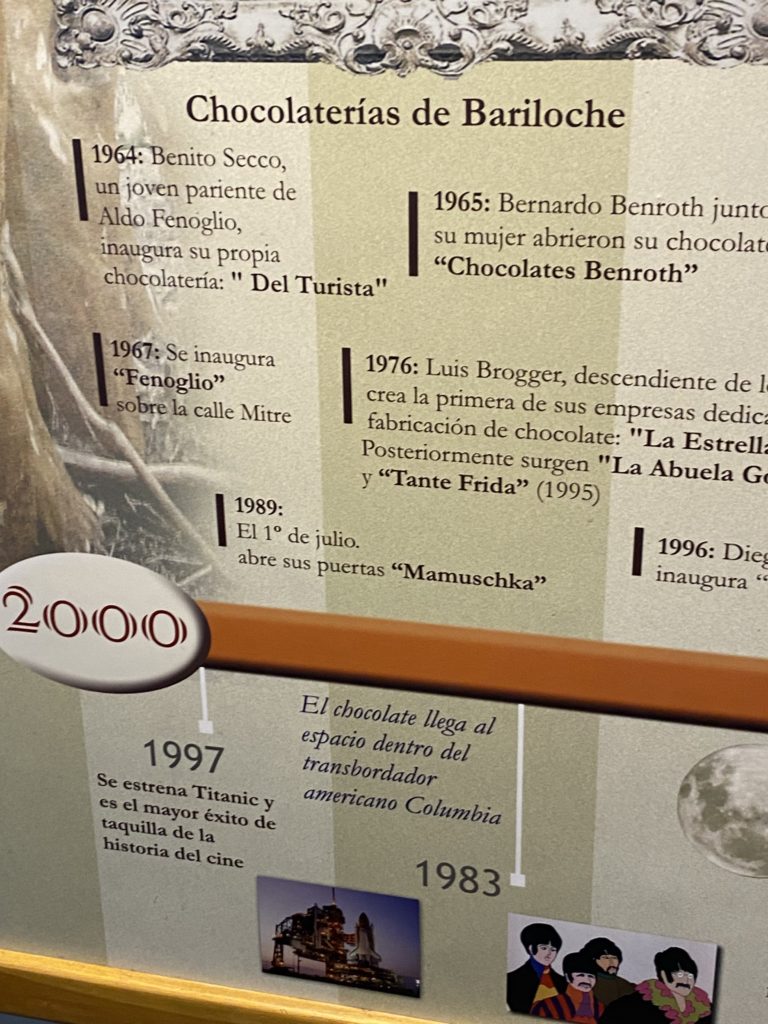
In March, Mark and I finally extended our chocolate trail explorations in celebration of our special anniversary to Bariloche…via Miami, Buenos Aires, Ushuaia, Antarctica, and Buenos Aires again. There were international flights, a cruise, a couple of domestic flights to get there. All of the travel was amazing, but Bariloche, sometimes called the chocolate capital of Argentina, had been on our choco-travel list for years. True, there had been some amazing gifts of delicious chocolate for my birthday from our travel friends.
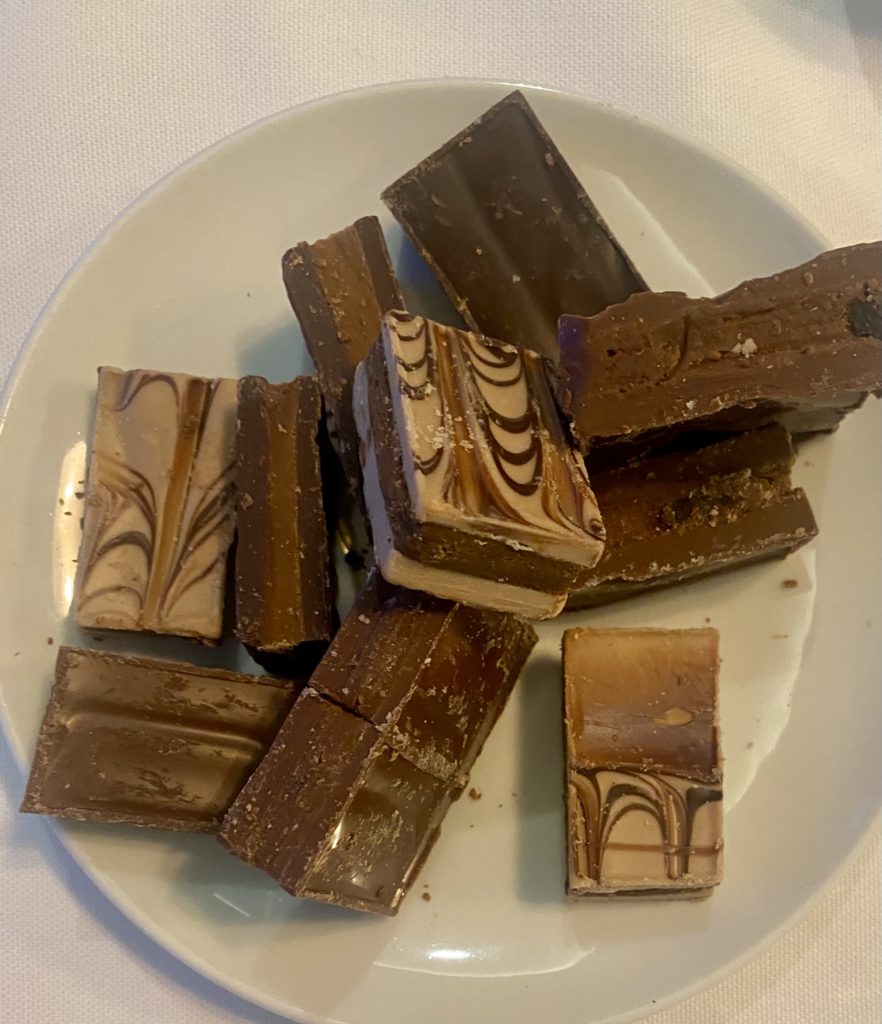
Still, the concentration of the Bariloche’s chocolate amazed us, even though we have visited many chocolate centers including France, Belgium, Switzerland, Spain.
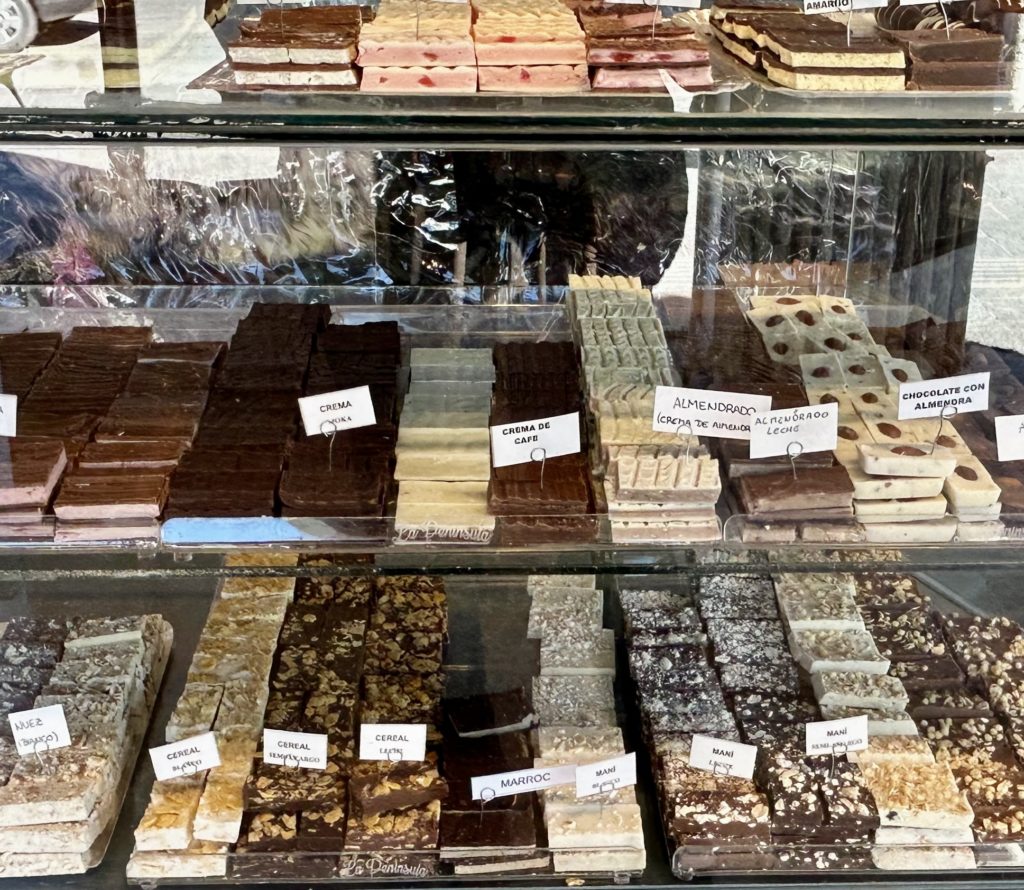
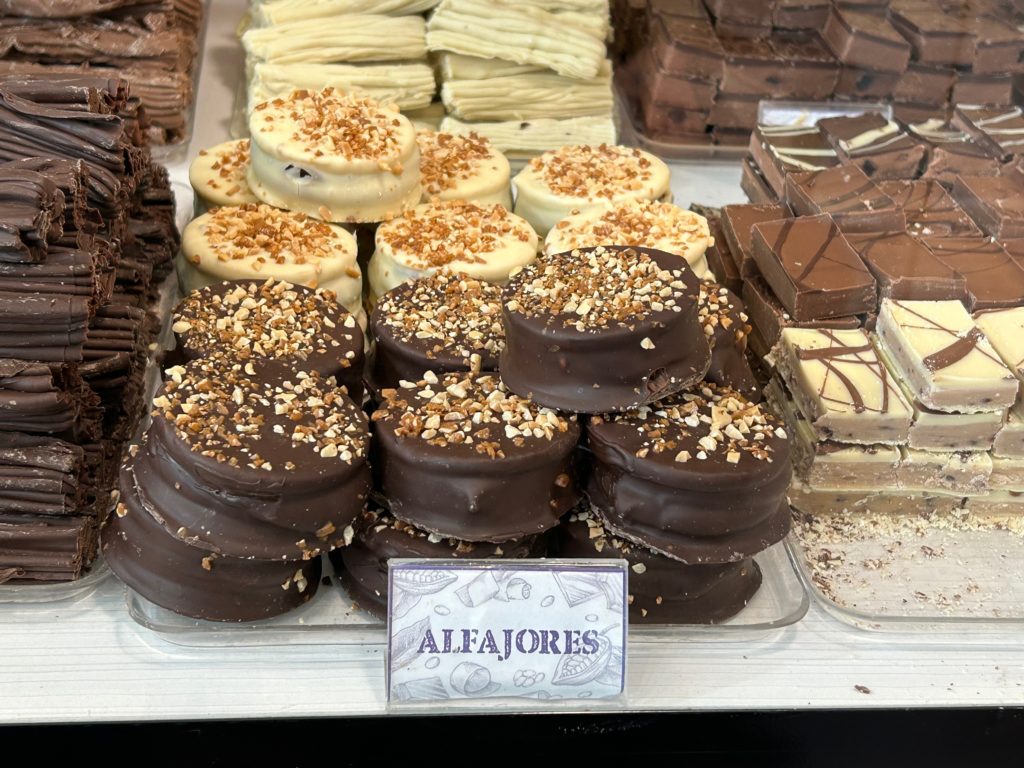
In Bariloche, the chocolate shops monopolize the downtown street, Mitre Avenue, for about three blocks. They feature bonbons, bars, hot chocolates, alfajores, and gelato. One company even houses an ice skating rink. They all served up distinctive brownie size, layered sheets of variously flavored chocolates. And, raspberries are a local addition. The Bariloche chocolate business started with an Italian immigrant from Turin (we also visited that chocolate haven) in 1947, Aldo Fenoglia, followed by later immigrants from Switzerland and Germany. (See some of the Nazi story of Bariloche.) Bariloche also boasts an annual chocolate festival around Easter.
A chocolate branch=ramitas=flake=mekupelet
Several shops also sell rama or ramitas, named for their branch or twig shapes. They’re the Cadbury Flake, first developed in 1920 when an employee named Ralph Thompson noticed overflowing chocolate folding onto itself at the factory in Bournville (we’ve been there, too). In Israel Elite Chocolate started making its version, mekupelet (from the Hebrew word fold) in 1935. Both companies stress the secrecy of their recipes. They’re all over Bariloche where it’s not such a secret process. (And, we’ve also seen it made at de Karina in Israel.)
Whether topping an ice cream cone, enriching a hot chocolate, or adding to a cake. Whether it’s a secret recipe or not, wherever you eat it, whatever you call it, it’s still a sweet, crumbly, chocolate treat for the chocolate trail.
0 Comments