
Now Available! The Boston Chocolate Party
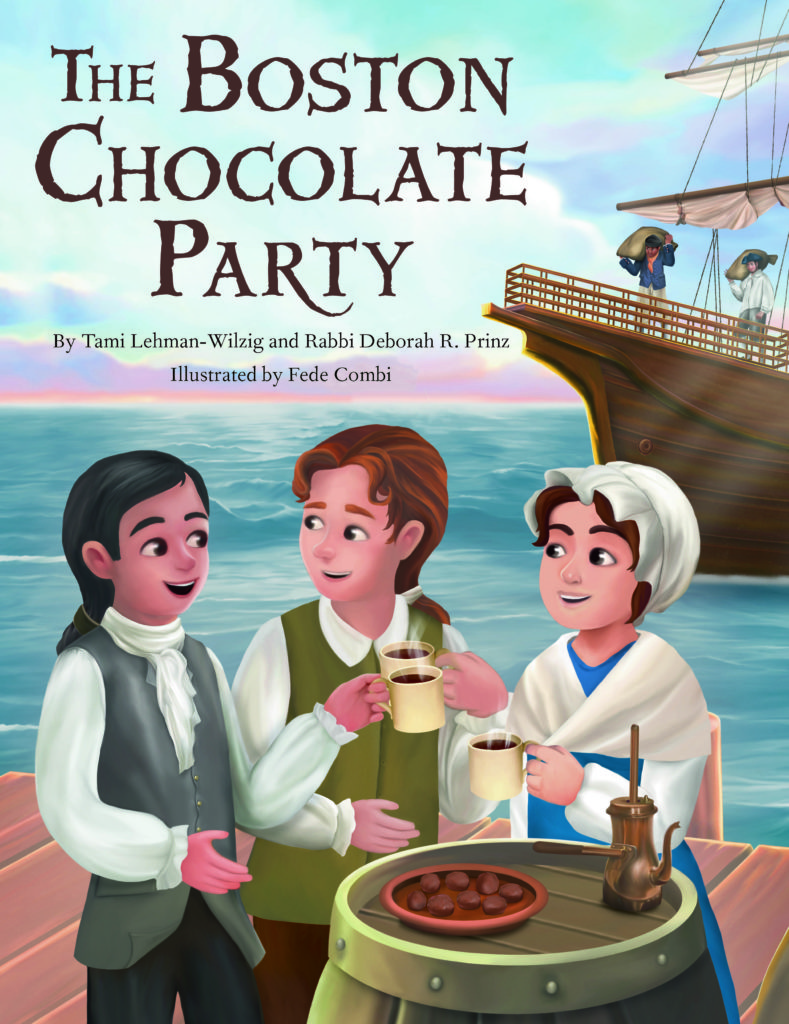
New England, December 1773…
It’s time to celebrate the Janucá holiday. Joshua Mendes is excited to light the menorah, eat fried dough buñuelos, and taste the new hot chocolate drink he and his family have been making to sell to curious colonists. But he’s also a bit sad, because times are tough and his best friend moved away amid a brewing fight for American independence.
Order now!
Readers say:
…I enjoyed sharing this book with [my children] because it’s about kindness, helping those in need, and families that look different from ours. But what really talked to me now, when there is so much antisemitism, is that this book shows that American Jews were in this country from the very beginning. It means we played a role, we belong, and I want my boys to know that.
Reading to our grandchildren is one of my favorite pastimes, and I’m glad I bought a copy of The Boston Chocolate Party. It’s a great book to read to them. Our granddaughter, who is in 2nd grade, figured out and understood that the struggle the Colonists faced was similar to the struggle Jews faced during Maccabean times. She loved Joshua and how he was able to help Isaac and his mother. But the chocolate element in the story is what she loved the best. She wanted to make your recipe for hot chocolate and drink some hot chocolate when we finished it! … Thank you for writing this book!
Forthcoming! On the Bread Trail
October, 2024! On the Bread Trail, an exploration and celebration of Jewish breads with insights into Jewish identity, culture, history, and customs around the world.
Now Available! On the Chocolate Trail
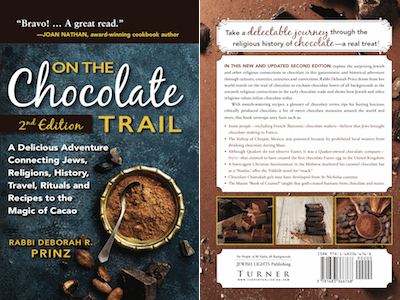 On the Chocolate Trail: A Delicious Adventure Connecting Jews, Religions, History, Travel, Rituals and Recipes to the Magic of Cacao (Second Edition)
Take a delectable journey through the religious history of chocolate—a real treat!
Explore the surprising Jewish and other religious connections to chocolate in this gastronomic and historical adventure through cultures, countries, centuries and convictions. Deborah Prinz draws from her world travels on the trail of chocolate to enchant chocolate lovers of all backgrounds as she unravels religious connections in the early chocolate trade and shows how Jewish and other religious values infuse chocolate today.
The book forms the basis for the museum exhibit, “Semite Sweet: On Jews and Chocolate,” now available to travel to your community from the Bernard Museum, Temple Emanu-El, NYC.
With mouth-watering recipes, a glossary of chocolaty terms, tips for buying luscious, ethically produced chocolate, a list of sweet chocolate museums around the world and more, this book unwraps tasty tidbits such as:
New!
•“Gods in My Chocolate,” twenty-first-century controversies about deities formed from chocolate: Blasphemy or art?
•Selecting the best chocolate
•What did Alexander Hamilton drink?
•Secret Santas hidden in my Maccabees
•Chocolate Babkathon: The best in NYC
•Hallal chocolate/Kosher chocolate
•25 contemporary & historical recipes
Plus:
Some—including French (Bayonne) chocolate makers—believe that Jews brought chocolate making to France
The bishop of Chiapas, Mexico, was poisoned because he prohibited local women from drinking chocolate during Mass.
Although Quakers do not observe Easter, it was a Quaker-owned chocolate company—Fry’s—that claimed to have created the first chocolate Easter egg in the United Kingdom
A born-again Christian businessman in the Midwest marketed his caramel chocolate bar as a “Noshie” after the Yiddish word for “snack.”
Chocolate Chanukah gelt may have developed from St. Nicholas customs.
The Mayan “Book of Counsel” taught that gods created humans from chocolate and maize.